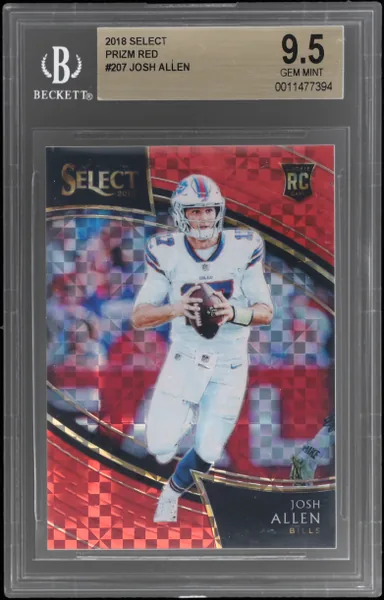
How to Store and Protect Trading Cards: Penny Sleeves, Toploaders, Semi-Rigids and Slabs
Sleeve every raw card in PVC-free polypropylene first, then match 35pt-to-180pt toploaders, semi-rigid grading holders or ringless zipper binders.
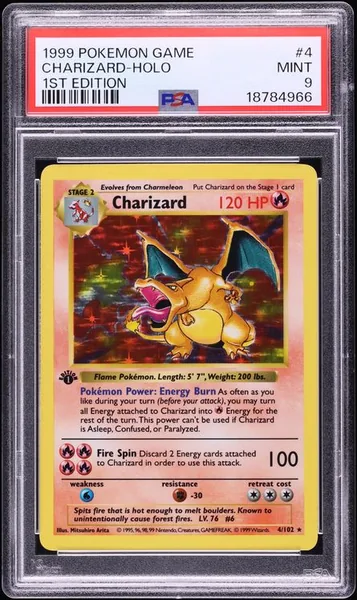
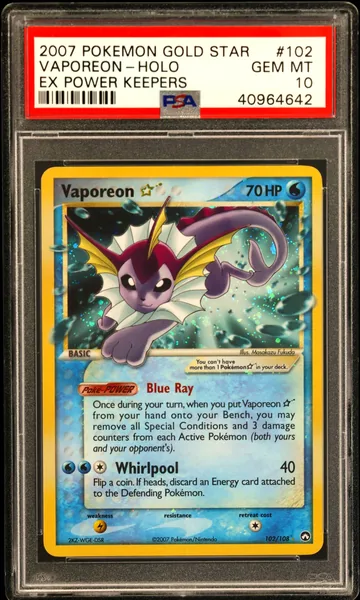
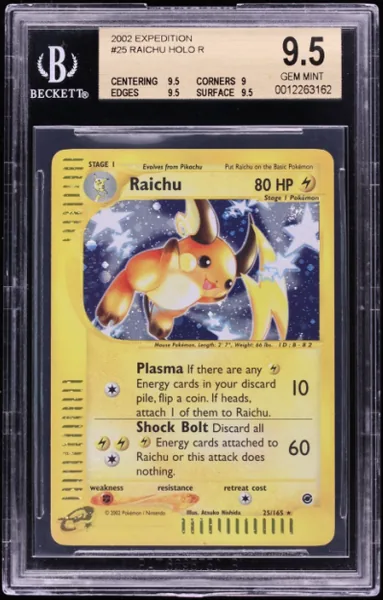
More Gem Mint candidates lose their top-grade ceiling inside desk drawers, three-ring binders and improperly sized plastic holders than at the printing press. Whether you collect vintage baseball, chromium rookies or textured Pokémon Special Illustration Rares, following a four-layer archival storage system keeps corners crisp, foil flat and acrylic slabs scratch-free across decades. See how small storage marks affect grades in our PSA 10 Gem Mint standards guide.
Acid-free penny sleeves
Every raw card worth protecting enters an acid-free, PVC-free polypropylene soft sleeve (commonly called a penny sleeve) before touching any rigid holder or binder pocket. Avoid cheap polyvinyl chloride (PVC) soft sleeves completely: PVC leaches plasticizers over time that bond chemically to card gloss and chromium coatings, leaving an irreversible cloudy film.
Standard 2.5 × 3.5 inch sports and TCG cards take standard 2 5/8 × 3 5/8 inch (67 × 92 mm) soft sleeves, vintage 1952–1956 Topps cards require oversized vintage sleeves, and thick jersey or patch cards require thick-cut sleeves up to 130pt so corners never split the side seams. Avoid ultra-tight inner deck sleeves on grading candidates because high friction during insertion can catch delicate foil borders; instead, pinch a standard penny sleeve open slightly between thumb and forefinger and guide the bottom edge in straight and level.
Toploader thickness chart
Rigid toploaders shield sleeved singles from bending, drops and shipping pressure, sized in points where 1pt equals one thousandth of an inch (0.001 in). Forcing a thick relic into a tight 35pt shell crushes its edges and delaminates foil, while dropping a standard 20pt paper card into a cavernous 100pt shell lets the card slide back and forth and blunt all four corners.
Standard paper and chrome base cards fit 35pt toploaders; thicker refractor inserts and thin jersey relics fit 55pt to 75pt; standard rookie patch autographs fit 100pt to 130pt; and thick multi-swatch, shadowbox or booklet cards require 180pt or dedicated booklet holders. For showcase display, UV-coated magnetic One-Touch holders with recessed diamond corners frame cards cleanly: always lay a clean penny sleeve across chrome or etched holofoil faces before closing the magnet if the holder lacks an inner sleeve recess, seal stored toploaders inside resealable team bags to keep dust out of the open top, and stand them upright in lidded row boxes.
Card holder thickness guide
| Holder size | Card thickness | Typical trading cards |
|---|---|---|
| 35pt toploader | Up to 0.035 in | Standard Pokémon, One Piece, paper & chrome base |
| 55pt–75pt toploader | 0.055–0.075 in | Thick die-cut inserts and standard jersey relics |
| 100pt–130pt toploader | 0.100–0.130 in | Rookie patch autographs and multi-layer relics |
| 180pt+ holder | 0.180 in & thicker | Thick patch cards, shadowboxes and booklets |
| Semi-rigid (Card Saver I) | Standard + 1/2 in lip | Preferred by PSA, CGC & BGS for grading mail-ins |
Standard point card-holder sizing (1pt = 0.001 in) and PSA, CGC and Beckett submission guidelines, checked Nov 17, 2026.
Semi-rigids for grading
Rigid toploaders protect long-term storage boxes well, yet PSA, CGC and Beckett instruct submitters not to mail grading orders inside rigid toploaders, magnetic One-Touches or screw-down bricks (unrecessed screw-downs flatten paper fibers and can cause cards to be rejected as altered). Intake technicians extract thousands of cards by hand, and tight rigid openings force fingers near delicate borders. Review current room rules in our PSA vs CGC vs BGS vs SGC guide and card grading costs guide.
Instead, place each penny-sleeved card inside an oversized semi-rigid holder (Card Saver I size, roughly 3 5/16 × 4 7/8 inches including its 1/2-inch top lip). Pinch the outer edges gently to bow the mouth open, slide the sleeved card flat to the bottom without creasing, and stack the semi-rigids in exact submission-form order between two oversized corrugated cardboard pads cinched snugly with rubber bands, never applying tape, staples or adhesive flags directly onto individual holders.
Zipper binders and slab bags
Complete set builders should retire three-ring O-ring and D-ring binders permanently. Even heavy D-rings allow pages to ride up onto the metal arch when a binder closes, pressing a curved "binder ding" indentation along the inside column that drops a card straight to PSA 5 or PSA 6. Side-loading, ringless 9-pocket or 12-pocket zipper binders with padded covers and non-woven backing keep penny-sleeved cards flat and sealed against dust.
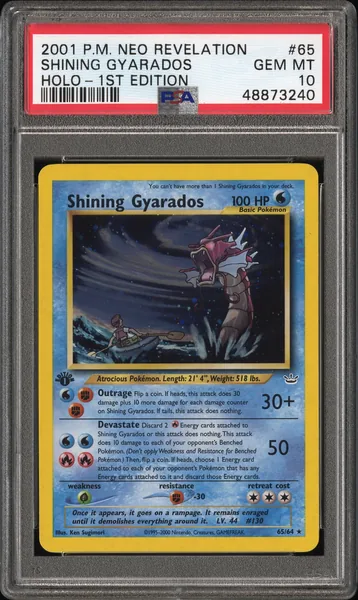
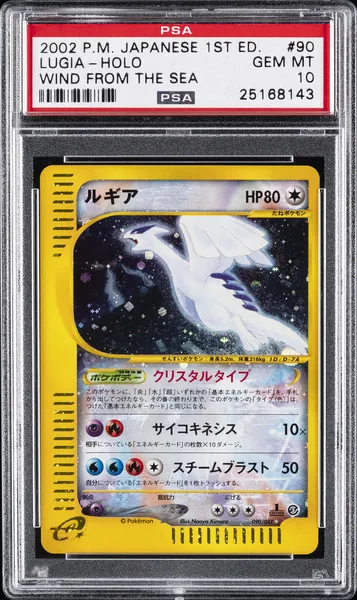
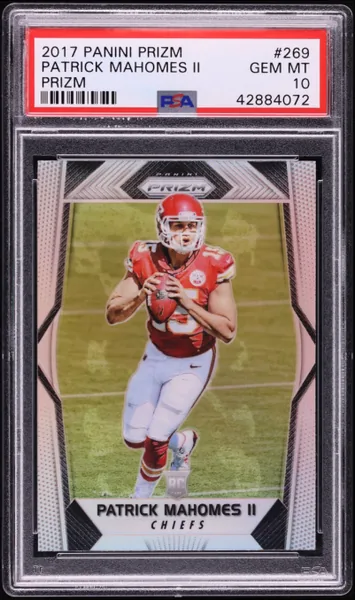
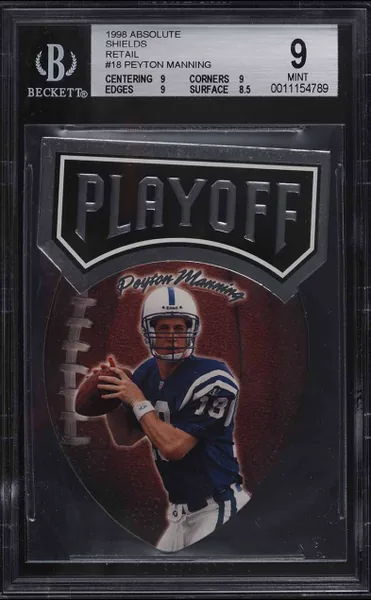
Encapsulated slabs from PSA, BGS, CGC, SGC and TAG still scratch readily when stacked bare acrylic-on-acrylic. Slip every slab into a fitted resealable polypropylene slab bag the day it arrives (after checking holder welds via our fake card and slab guide) and store slabs vertically inside slotted two-row cardboard boxes or foam-cut hard cases, never stacked loose horizontally.
Humidity and sunlight control
The room itself acts as your final storage layer. Modern foil cards combine non-porous metallic film on the front with porous paper fibers on the back; when air turns damp in summer basements or overly dry near winter heating vents, the paper layer expands or contracts while the foil sheet stays rigid, bowing raw cards into a noticeable curve.
Store collections in an interior living-space closet away from attics, basements, garages and exterior radiator walls, targeting steady 65–72°F indoor temperatures and moderate household humidity with rechargeable silica desiccant packs inside sealed cases. Keep display shelves out of direct window sunlight, whose ultraviolet rays fade on-card blue autographs and yellow PSA and BGS flip borders even inside UV-treated cases.
Questions
- Should a card always go into a penny sleeve before a toploader?
- Yes, every time. Sliding a bare card straight into a rigid PVC toploader scratches glossy and holofoil surfaces and nicks bottom corners on entry. An acid-free polypropylene penny sleeve must always be the inner layer touching the card.
- What size toploader fits standard Pokémon and sports cards?
- Standard 2.5 × 3.5 inch Pokémon, One Piece and paper or chrome sports cards measure roughly 20pt to 32pt thick and fit cleanly inside a 35pt toploader paired with a standard 67 × 92 mm penny sleeve.
- Why do PSA, CGC and Beckett prefer semi-rigid holders instead of toploaders?
- Grading intake staff extract cards by hand before imaging and encapsulation. Flexible semi-rigid holders (such as Card Saver I, 84 × 124 mm) hold the sleeved card flat in transit while flexing open cleanly during removal without risking corner dings.
- Are three-ring binders safe for storing trading card sets?
- No. O-ring and D-ring binders press inner-column cards against metal rings whenever pages turn or stack unevenly, leaving permanent crescent indentations known as binder dings. Use ringless, side-loading zipper binders instead.
Real trading card packs, ready to open.