How to Spot Fake Pokémon Cards and Graded Slabs: Texture, Cardstock and Cert Checks
Check surface texture, black core cardstock, crisp fonts and back blue tones on raw cards, then verify slab certs and seams.
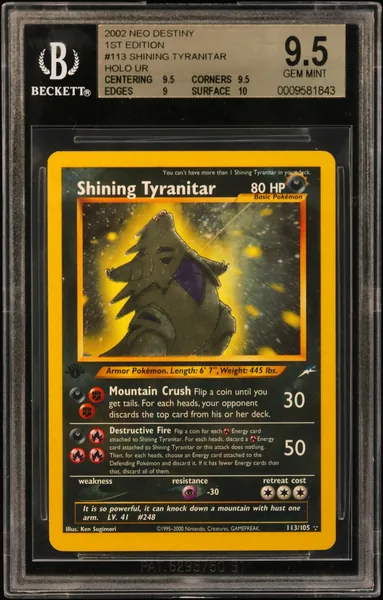
Holo texture and foil
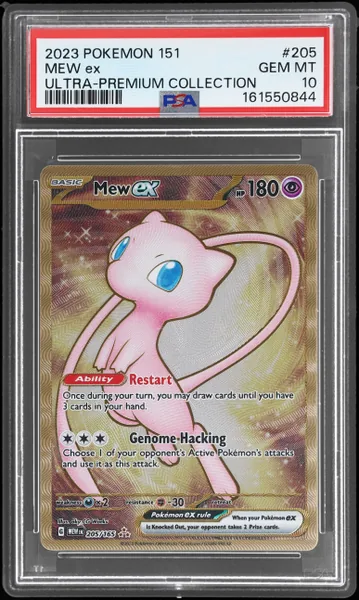
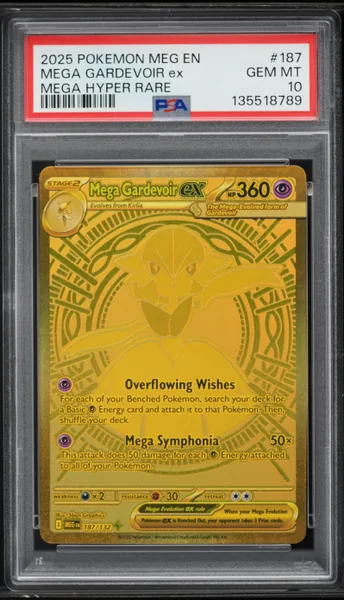
Surface texture is the single fastest visual check on modern high-tier Pokémon cards. Starting in the Black and White Full Art era and continuing through Sword and Shield Alternate Arts and Scarlet and Violet Special Illustration Rares and Hyper Rares, The Pokémon Company etches intricate physical ridges directly into the top foil layer. Under angled desk lighting, genuine Full Arts, VMAX Alternate Arts and Special Illustration Rares show fine fingerprint-like concentric lines that curve around the Pokémon, attack text and borders rather than cutting straight across the card.
Low-grade counterfeits almost always miss this micro-embossing completely, substituting a flat, mirror-smooth glossy laminate that throws off a vertical oil-slick rainbow glare. Higher-effort fakes sometimes stamp a generic crosshatch or grid texture onto the foil, yet the ridges run uniformly over the character's face instead of following the artwork contours. Before inspecting texture, confirm which rarity tier the card belongs to with our Pokémon rarity symbols guide: standard Double Rare ex cards, Illustration Rares with single gold stars and vintage Base Set holos are genuinely smooth and rely on layered holofoil patterns rather than etched ridges.
Cardstock layers and fonts
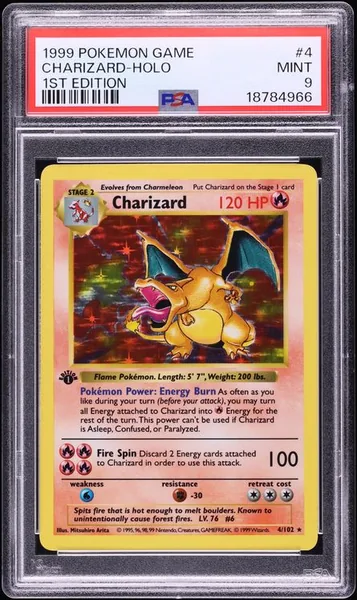
When a card has a smooth finish by design — such as a 1999 Base Set holo, an Illustration Rare or a vintage Gold Star — inspect the cut edge, the back blue tones and the typography. Genuine English Pokémon cards are printed on multi-ply cardstock bonded around a microscopic opaque black graphite core. Looking straight at the side edge of a raw English card through a 10x jeweler's loupe reveals a razor-thin dark grey-black line sandwiched between crisp white outer layers. Cheap counterfeits printed on single-layer poster board look chalky white all the way through and feel waxy or overly flexible in the hand.
Flip the card over next and place a pack-fresh basic Energy card right beside it for color reference. Authentic English card backs pair deep royal-blue outer borders with rich navy swirls around the central Poké Ball; counterfeit backs frequently skew washed-out violet, pale cyan or muddy indigo with blurred shading inside the upside-down white Poké Ball half. Finally, read the HP numeral, attack damage font, accent mark over the "é" in Pokémon, and the spacing inside the circular Energy icons. Fakes routinely print oversized black star icons inside Colorless Energy circles, drop the acute accent on "Pokemon" inside rule boxes, or misspell Trainer and illustrator credits along the bottom margin.
PSA label security features
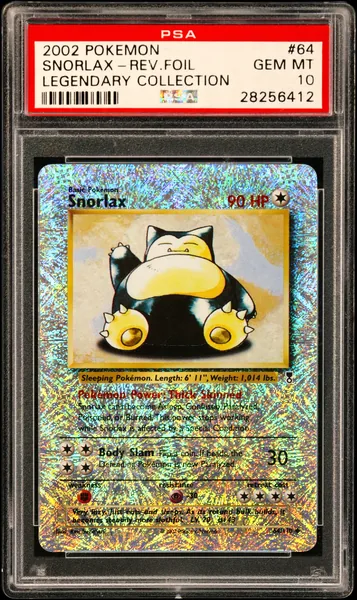
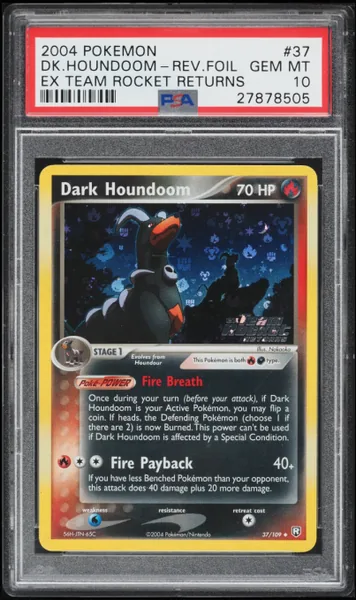
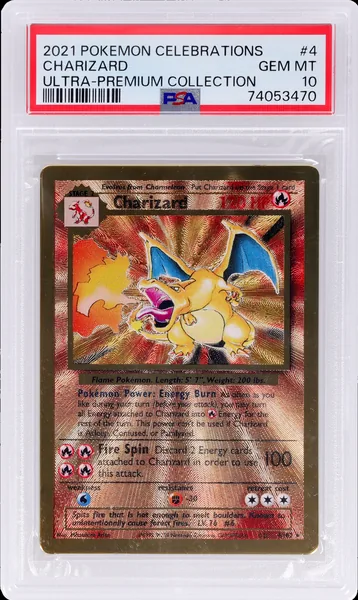
As prices climbed on top graded Pokémon cards, counterfeiters began faking acrylic grading holders or swapping low-grade cards into cracked cases, making holder authentication just as important as checking the card itself. Whenever you examine a PSA slab, start by typing the eight-to-ten-digit certification number at PSA's official cert lookup page. On newer PSA slabs, open the high-resolution front and back scans stored by PSA at encapsulation and compare three fingerprint details: exact border centering, holofoil star positions on vintage cards, and the exact placement of barcode bars and numerals on the flip.
Modern PSA Lighthouse labels carry multiple physical security layers that photocopiers cannot reproduce cleanly. Tilt the label under light to verify the dual-tone silver foil PSA Lighthouse strip on the front and back: genuine Lighthouse foil shifts smoothly between light and dark metallic elements, whereas fake stickers look flat grey or flash generic rainbow sparkles. Under a handheld 365nm ultraviolet blacklight, authentic modern PSA labels reveal a repeating pattern of glowing PSA logos across the white paper field plus fluorescent fugitive-ink security bands along the red border. Check label typography closely too: fake PSA flips often leave a curly tail on the numeral "1", print fuzzy barcodes or misalign the "GEM MT" line.
Authentication checks at a glance
| Area | Genuine Pokémon or slab | Counterfeit warning sign |
|---|---|---|
| SIR & Full Art surface | Etched fingerprint ridges | Smooth glossy rainbow sheen |
| English card edge | Thin dark graphite center layer | Solid white stock or translucent glow |
| Card back border | Deep royal blue with crisp detail | Washed-out purple or cyan tint |
| Slab label & cert | Matching grader scan and sharp font | Mismatched photo or wavy paper label |
| Acrylic case seam | Clean clear ultrasonic weld | Cloudy glue marks or cracked frosting |
From PSA, CGC and Beckett holder security guides, checked Nov 15, 2026.
CGC and slab seams
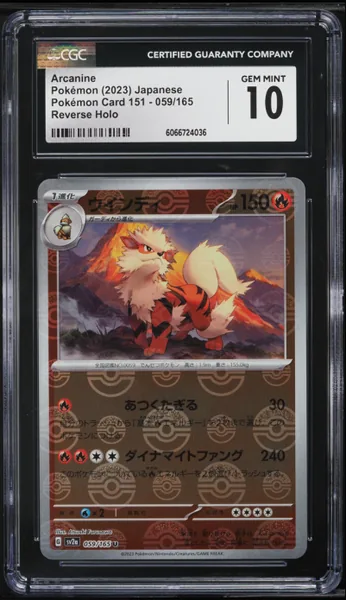
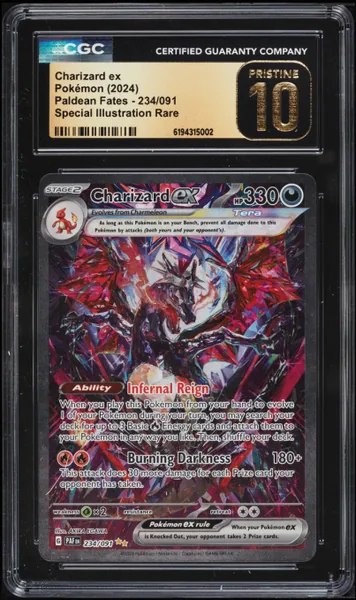
CGC and Beckett holders carry equally distinct physical markers, as outlined in our grading company guide and our PSA 10 vs BGS 9.5 vs CGC Pristine 10 comparison. Authentic CGC Cards holders feature crystal-clear optical acrylic, crisp bold numerals on white Gem Mint 10 or metallic gold Pristine 10 labels, a precision holographic security foil square on the reverse, and matching high-resolution front and back grader images on CGC's online cert lookup portal.
Beckett Grading Services slabs stand out structurally because Beckett seals every card inside a clear, archival inner Mylar sleeve before ultrasonic welding the thick outer case shut, and stamps its metallic gold, silver or black sub-grade flip with crisp die-cut corners. Across all three graders, inspect all four outer perimeter edges of the plastic slab before buying. Grading companies seal holders with industrial ultrasonic welders that fuse the front and back acrylic halves along a clean, uniform seam. If a slab shows white stress-frosting along one side, cloudy superglue residue, uneven corner gaps or raised pry marks, someone may have cracked the holder open to swap the card inside.
Safe checks before buying
Most counterfeit headaches happen when buyers rush on blurry, angled smartphone photos or unverified social listings with no back scan. Always insist on sharp, straight-on front and back photographs showing all four slab edges, readable certification numbers and clear holofoil texture reflections before committing to a card.
Shopping verified graded inventory in the Market removes backyard seller guesswork by pairing studio slab photography with authenticated, vaulted physical custody. Keeping a $10 jeweler's loupe and a pocket 365nm UV light in your desk drawer gives you a fast two-minute inspection routine for every raw card and graded slab you bring home from card shows or mail deliveries.
Questions
- Why should you never perform a tear test on a suspected Pokémon card?
- Tearing a card in half to look for the inner graphite layer permanently destroys the card, and non-destructive edge magnification tells you the exact same fact safely. Using a 10x jeweler's loupe or phone macro lens along the cut white edge shows the thin dark sandwich line on genuine English stock without harming a real collectible.
- Do Japanese Pokémon cards use the same black inner cardstock core as English cards?
- No. Genuine English Pokémon cards use a white-black-white cardstock sandwich, whereas genuine Japanese Pokémon cards are printed on thinner, smoother multi-ply stock with a light blue inner adhesive layer. Never judge a Japanese card as counterfeit solely because its edge lacks a black line.
- Can counterfeiters copy a real PSA certification number onto a fake holder?
- Yes. Counterfeiters routinely scrape real certification numbers from public listings so the digits resolve on PSA's lookup page. That is why you must compare the card inside the holder — holofoil pattern placement, centering shift and label typography — directly against the official scan stored on PSA's cert page.
- Should you shine a phone flashlight through a Pokémon card to test authenticity?
- Use the light test only by comparing against a known genuine common card from the exact same set and language. Cheap single-ply fakes let bright LED flashlight beams pass straight through like notebook paper, whereas genuine English black-core stock blocks most light, though Japanese stock is naturally slightly thinner.
Real trading card packs, ready to open.