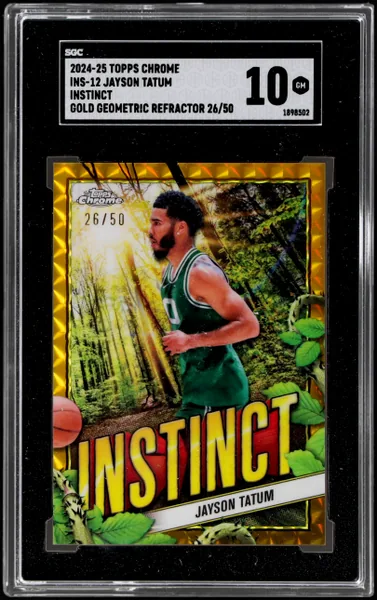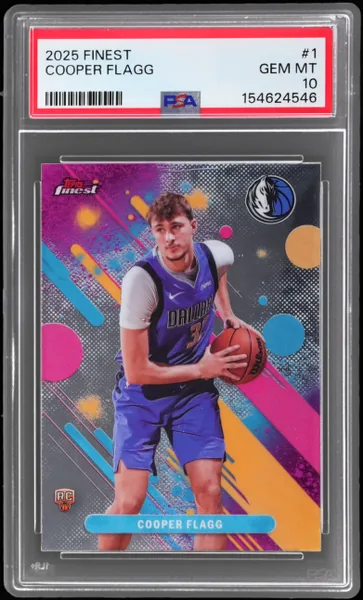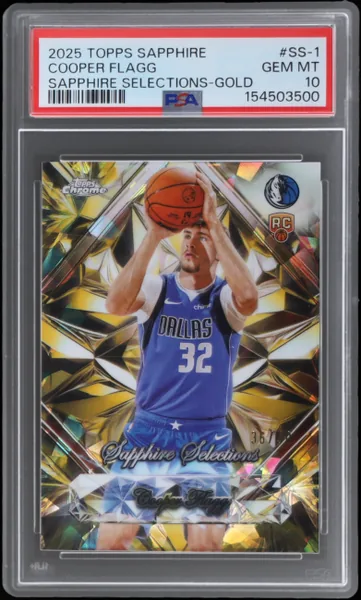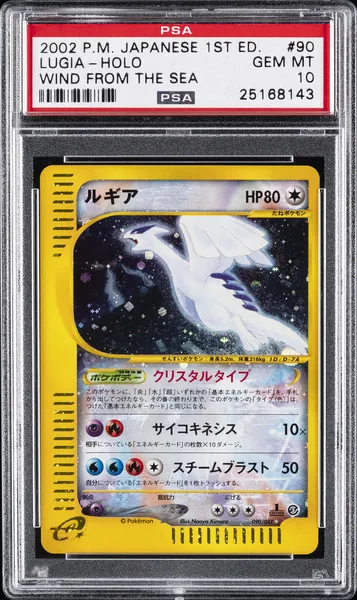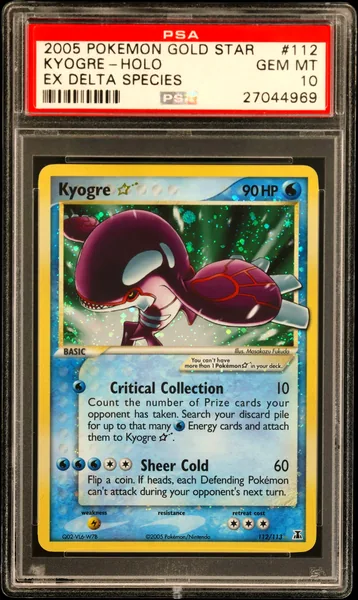
PSA 10 vs BGS 9.5 vs CGC Pristine 10: Gem Mint and Pristine Grades Compared
PSA 10, BGS 9.5 and CGC Gem Mint 10 are Gem Mint grades; CGC Pristine 10 and BGS 10 sit above them.
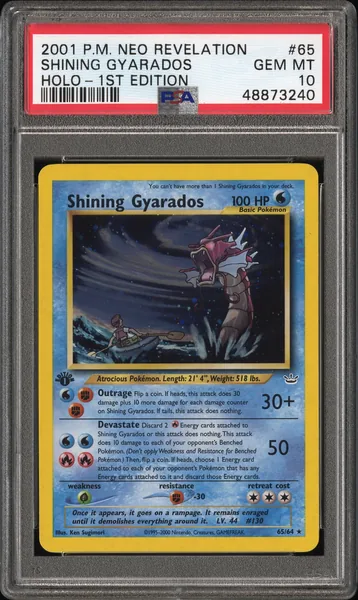
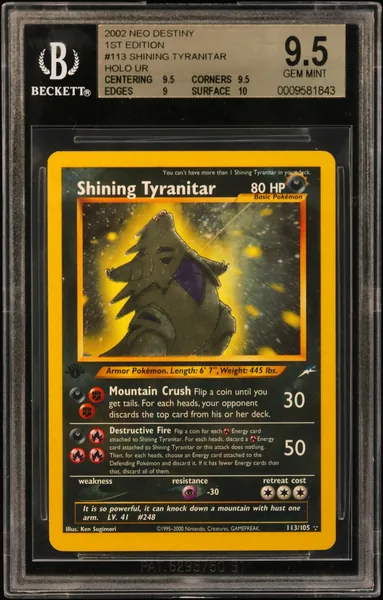
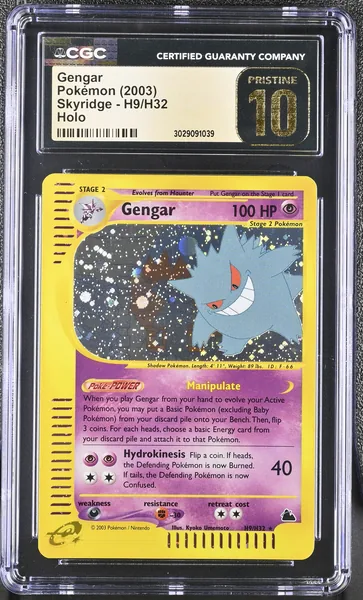
Gem mint tier overview
PSA 10, BGS 9.5 and CGC Gem Mint 10 all represent the Gem Mint tier, while CGC Pristine 10 and BGS 10 occupy a stricter Pristine tier above them. New buyers comparing slabs in the Market often assume two tens from different companies measure the exact same condition, or assume a 9.5 is always one full step worse than a 10. In practice, Professional Sports Authenticator, Beckett Grading Services and Certified Guaranty Company divide the top of the 10-point scale differently.
PSA uses a single top grade, Gem Mint 10, with no sub-grades and no Pristine label above it. Beckett places Gem Mint at 9.5 and reserves its 10 label for Pristine and Black Label copies that clear four strict sub-grade checks. CGC splits its 10 into two distinct holders: a standard white-label Gem Mint 10 that aligns with PSA 10, and a metallic gold-label Pristine 10 for virtually flawless cards. Understanding where each label sits on the condition ladder helps you read population counts accurately across Pokémon cards, One Piece releases and modern chrome sports sets, alongside our broader grader comparison guide.
Top grades compared
| Label | Grade tier | Front centering | Sub-grades |
|---|---|---|---|
| PSA 10 | Gem Mint | 55/45 to 60/40 | None |
| BGS 9.5 | Gem Mint | 50/50 to 60/40 by subgrade | Four printed |
| CGC Gem Mint 10 | Gem Mint | 55/45 | None |
| CGC Pristine 10 | Pristine | 50/50 | None |
| BGS 10 Black Label | Pristine | 50/50 flawless | Four 10s |
From PSA, Beckett and CGC published grading scales, checked Nov 15, 2026.
PSA centering and surface
A PSA 10 Gem Mint card is a virtually flawless card to the unaided eye, with four sharp corners, full original gloss and clean borders. On its published grading standards page, PSA specifies front centering of approximately 55/45 to 60/40 or better and reverse centering of 75/25 or better for Gem Mint 10. In day-to-day submissions, graders enforce the tighter 55/45 mark whenever border framing makes an off-center shift obvious at arm's length, such as silver-bordered Scarlet and Violet Pokémon cards or framed Panini Prizm basketball issues.
Because PSA prints one final grade with no sub-grades, a PSA 10 slab does not itemize whether a tiny allowance was used on centering or on a microscopic factory print dot. PSA graders inspect cards under magnification and directional lighting to rule out surface indents, roller lines, foil lifting and corner whitening. Vintage cards from 1999 Base Set Pokémon or 1980s paper sports stock face heavy attrition at the PSA 10 level because rotary cutting blades left rough fiber edges and holofoil sheets picked up factory silvering before leaving the pack. You can see how low-population PSA 10 slabs stand apart on our top graded Pokémon cards list.
BGS subgrades and tens
Beckett Grading Services evaluates four separate categories on every standard submission: Centering, Corners, Edges and Surface, each scored in half-grade steps up to 10. Those four numbers are printed right on the metallic inner flip, and Beckett's weighting formula prevents a single weak area from hiding behind three strong ones. An overall grade can sit at most 0.5 above the lowest sub-grade, or 1.0 above when the other three sub-grades are much higher at lower tiers.
Within BGS 9.5 Gem Mint, hobbyists distinguish three sub-grade profiles by reading the label directly. A min-gem carries three 9.5s and one 9.0, a true gem carries four 9.5s across the board, and a quad-plus or 9.5+ carries at least one 10 sub-grade alongside 9.5s. Above 9.5 sits the gold-label BGS 10 Pristine, which requires three 10 sub-grades and one 9.5, with front centering near 50/50 on the 10 centering check. At the absolute ceiling sits the BGS 10 Black Label, awarded only when all four sub-grades score a pristine 10. Thick patch autographs from Panini National Treasures or Flawless and foil-heavy Bandai anime cards often go to Beckett because four visible sub-grades reward razor-sharp surfaces even if one thick corner scores a 9.0 or 9.5.
CGC gold and standard labels
CGC operates a two-tier 10 structure designed specifically around modern Japanese and international trading card games. Standard CGC Gem Mint 10 uses a clean white label, requires 55/45 or better front centering and 90/10 or better back centering, and allows no eye-visible wear on corners, edges or holo foil. Functionally, CGC Gem Mint 10 sits on the exact same Gem Mint rung as PSA 10 and true-gem BGS 9.5.
Above that sits CGC Pristine 10, housed in a shimmering gold foil label with a bold numeral 10. To earn CGC Pristine 10, a card must measure 50/50 front centering to the eye, 75/25 or better back centering, flawless corners under magnification, zero edge specks and uninterrupted surface texture. Japanese Pokémon Special Illustration Rares and Bandai One Piece alternate arts earn CGC Pristine 10 more frequently than North American print runs because Japanese factory die-cutters leave cleaner back edges and tighter border registration. When comparing two CGC 10 listings, always check the label header first: Gem Mint 10 and Pristine 10 are two separate grades with very different population counts.
Crossover rules between graders
Crossover grading lets an owner send an already-encapsulated slab to another grading company and ask them to transfer the card into their holder only if it meets a specified minimum grade. Before mailing any slab for crossover, review our breakdown of card grading costs and turnaround times, since evaluation fees and insured shipping apply whether the card crosses or gets declined as Minimum Grade Not Met.
When evaluating a BGS 9.5 as a crossover candidate for PSA 10, inspect the four sub-grades first. A copy with a 9.0 on Corners or Surface rarely crosses into a PSA 10 holder because corner whitening and holo scratches are easy to spot through the case, whereas a true-gem BGS 9.5 with four 9.5s or a 10 centering sub-grade aligns closely with PSA's Gem Mint eye-appeal rule. Evaluating a slab through thick acrylic also limits what a grader can see on dark edges, which is why graders stay conservative when a card stays sealed during review. Regardless of which holder you prefer, always check label security features using our slab authentication checklist before buying high-tier cards.
Questions
- Does PSA offer a Pristine or Black Label tier above PSA 10?
- No. PSA caps its grading scale at Gem Mint 10 with no Pristine or Black Label tier above it. Every card that clears PSA's Gem Mint standard receives the same red-bordered PSA 10 label, whether its front centering measures a dead-center 50/50 or sits near the outer 55/45 to 60/40 threshold.
- Why did CGC retire its 9.5 Gem Mint label and split the 10 tier?
- In July 2023, CGC aligned its numeric scale with hobby norms by moving Gem Mint from 9.5 to 10 and turning 9.5 into Mint+. Older blue-label CGC 9.5 Gem Mint slabs qualify for reholder upgrades to the standard CGC Gem Mint 10 label, while CGC Pristine 10 kept a separate gold label for 50/50 centered cards.
- What sub-grade combinations produce a BGS 9.5 vs a BGS 10 Pristine?
- Beckett's algorithm caps a card's overall grade at no more than 0.5 above its lowest sub-grade. Three 9.5s and one 9.0 yield a BGS 9.5, often called a min-gem by hobbyists, whereas four 9.5s form a true gem and three 10s with one 9.5 are required for a gold-label BGS 10 Pristine.
- What does a minimum grade mean on a crossover submission?
- A minimum grade tells the receiving company to leave the card sealed in its current holder unless it meets or exceeds the numeric floor you specify. If you submit a BGS 9.5 to PSA with a PSA 10 minimum and the graders assign a 9, you still pay the evaluation fee, and your card returns inside its original BGS slab.
- Are back centering tolerances as strict as front centering on Gem Mint 10 slabs?
- No. All three major graders allow noticeably wider back centering than front centering because card backs are less visible on display. PSA permits up to 75/25 reverse centering on a Gem Mint 10, CGC allows up to 90/10 on Gem Mint 10 and 75/25 on Pristine 10, and Beckett allows roughly 70/30 on a 9.5 centering sub-grade.
Real trading card packs, ready to open.